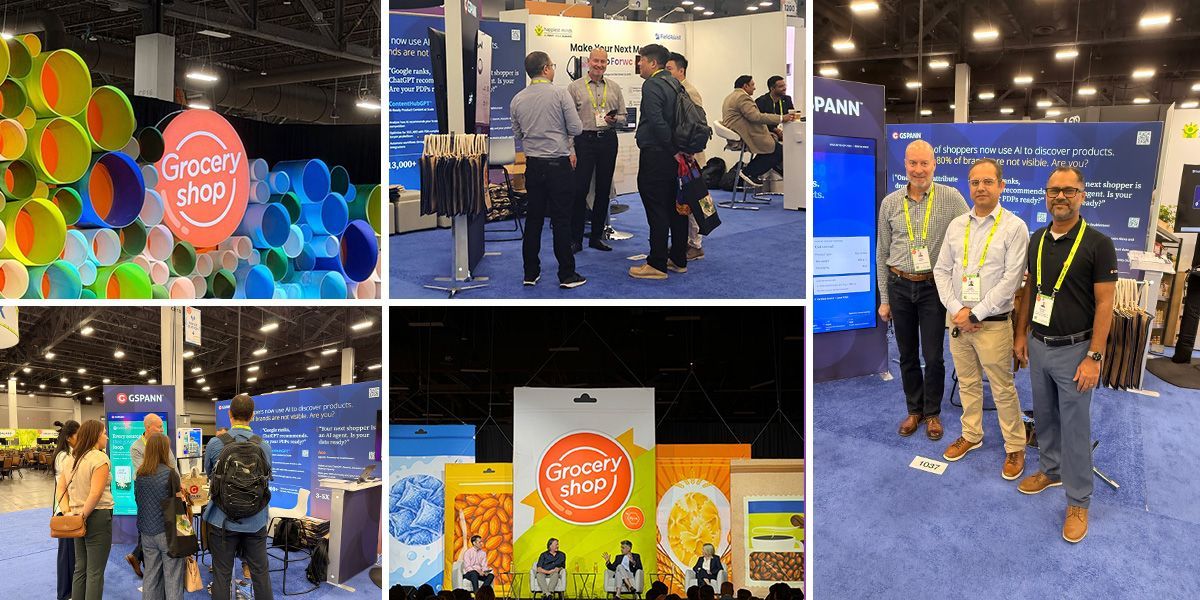
We went into Groceryshop 2026 with four platforms and a hypothesis: that most grocery and CPG brands know AI is changing how shoppers find products, but have no real sense of how bad their own exposure already is. Three days at Mandalay Bay, 4,000+ senior retail and CPG leaders on the floor, and a steady line of conversations at our booth later, that hypothesis held up, and in one specific way surprised us.
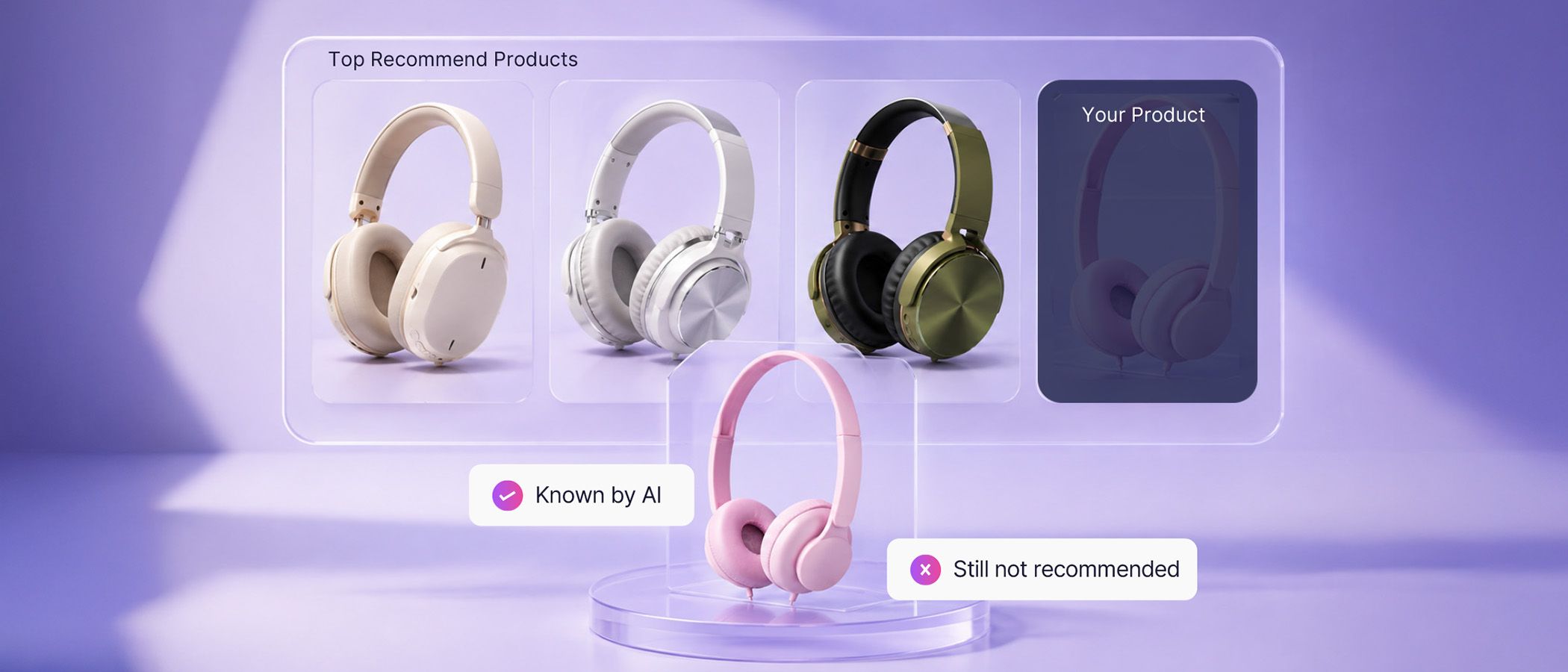
ChatGPT, Gemini, or Amazon Rufus recommended their brand products in their category? Most people didn't know. A few assumed yes, because their SEO was strong. Almost none had actually tested it. 64% of shoppers now use AI to discover products, and roughly 80% of brands are not visible when they do, so the question wasn't abstract. It was the specific, answerable thing most people had never had reason to ask before: not "how is our SEO," but "does the AI actually recommend us."
What We Showed, and What People Leaned Into
ContentHubGPT got the most immediate recognition. It is our AEO- and GEO-ready product content platform, already running for 110+ brands creating governed content today, and it is the platform that recently won ‘Best Generative AI Product of the Year’ at the ET Enterprise AI Awards 2026. People were amazed not just by its product content creation but how it was able to showcase whether their product actually appeared in a ChatGPT or Perplexity answer. Seeing the gap in real time changed the conversation from "that sounds useful" to "can you check ours right now."
ContentHubGPT | Product Content for the AI Shelf →
Argus also stole the show for all those who wanted their products to rank higher and be more visible in marketplaces like Walmart, Amazon etc. Argus runs three AI agents continuously against a brand's top SKUs. One tracks search rank daily on Amazon, Walmart, and Target. One diagnoses the specific content gap letting a competitor outrank you. One drafts the fix and routes it through the brand's existing PXM for a single human sign-off. The Argus pricing is also outcome-based: a small platform fee covers integration, and the rest is tied to the rank movement a brand agrees to upfront.
Argus | Digital Shelf Intelligence & Optimization →
ACE, our PXM Playbook for Agentic Commerce, is the one most people needed walked through slowly, because it is less a single tool and more a structured engagement: five pillars of LLM-ready product data (attribute completeness, semantic content structure, rich media compliance, cross-channel consistency, continuous data governance), delivered through an 8-week PXM Readiness Programme. The number that made people pause was 40%, the share of Walmart's Polaris ranking algorithm that sits in attribute completeness alone. Most teams had never audited themselves against that pillar specifically.
ACE | PXM Playbook for Agentic Commerce →
Vivid, our GenAI Vendor Data Ingestion accelerator, was the conversation that surprised us. We expected it to be a secondary mention behind the three AI-facing platforms. Instead, for brands and retailers managing supplier-fed catalogs, it was often the first problem they wanted solved, because none of the AI-readiness work upstream matters if vendor files are still landing in five different formats and sitting in a manual cleanup queue for weeks. VDI maps vendor fields automatically, validates and enriches the data, and publishes verified content into Salsify, Syndigo, or Akeneo. The number that came up most in those conversations: 23% of potential revenue lost industry-wide to bad product data.
VDI | GenAI Vendor Data Ingestion →
The Hard Part Nobody Has Solved Yet
The question we could not answer cleanly for anyone, and the one we are still working on ourselves, is how a brand should prioritize across all four of these problems at once. A team with messy vendor data, weak attribute completeness, and no visibility into AI answers is facing three compounding problems, not one, and there is no universal order of operations.
We built a Starter Audit specifically because most teams need their own numbers before they can decide where to start, not a generic playbook that assumes their biggest gap looks like everyone else's.
Where the Conversation Goes Next
For the people who wanted to see their own numbers rather than take our word for it, we pointed them to two free assessments that do not require a contract to start.
The Argus shelf assessment checks where a brand's priority SKUs actually rank today on the retailer of their choice, compares the listing against whoever is currently outranking it, and identifies the specific content gap behind the gap, all before any commitment.
Request a free Argus shelf assessment →
The ContentHubGPT AI shelf report tests real buying questions for a brand's category across ChatGPT, Gemini, Claude, and Perplexity, and comes back with a Presence Score out of 100, benchmarked against named competitors, reviewed by a person, delivered within two business days.
Request a free ContentHubGPT AI shelf report →
Endnote
Three days on a trade show floor is a strange way to learn anything, but it clarified something for us. Brands are not short on urgency about AI anymore. They are short on a reliable way to see where they actually stand. That is the gap all four of these platforms are built to close, and it is the conversation we are continuing with the people we met.
If you stopped by our booth, or maybe missed meeting us, reach out to us at marketing.team@gspann.com.
Our Experts

Sumit Kapoor
Vice President, Engineering, Platform

Anurag Gupta
Vice President - Digital Commerce